by Alejandro Martínez Treceño | Oct 15, 2026 | News
ALE at IRSC 2026: Building Railway Safety with Frontline Workers
The Federation of European Train Drivers’ Unions contributed to the international debate on railway safety, highlighting the importance of human factors, operational experience and workers’ participation in technological innovation.
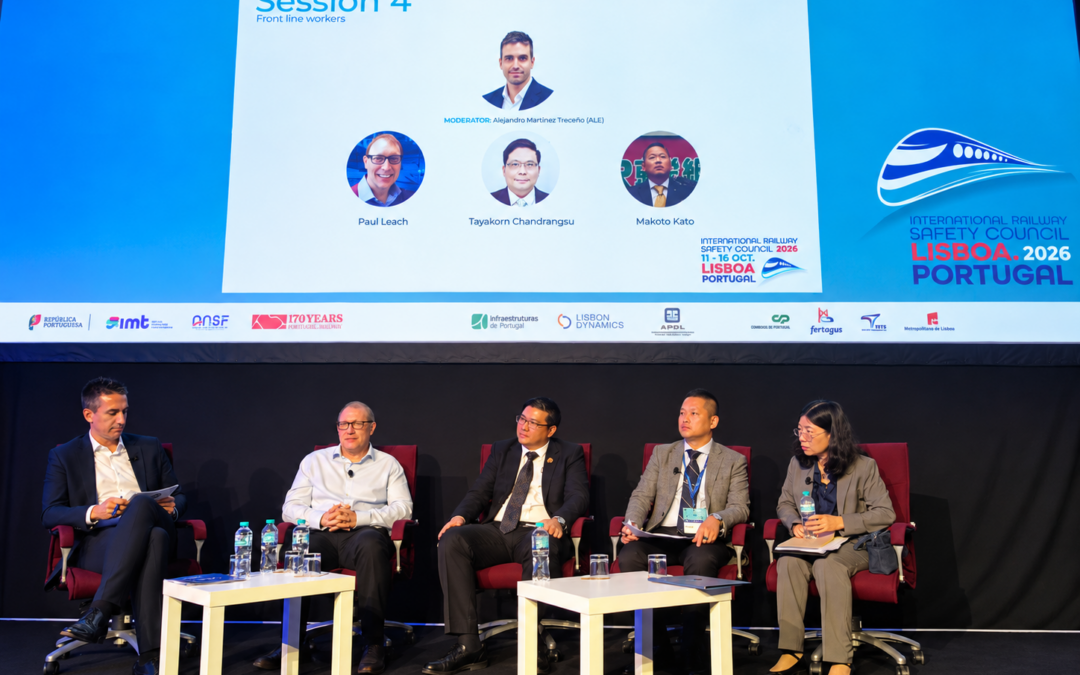
Lisbon, 13 October 2026 The Federation of European Train Drivers’ Unions (ALE) participated in the International Railway Safety Council (IRSC 2026), held in Lisbon, Portugal, contributing to discussions on the challenges facing railway safety and the essential role of frontline professionals.
ALE was represented by its Secretary General, Alejandro Martínez Treceño, who moderated Session 4 “Front line workers”, bringing together international experts to explore how operational experience, technological developments and human factors can contribute to safer railway operations.
International perspectives on railway safety
The session featured three presentations addressing different but complementary aspects of railway safety:
- Paul Leach explored driver alertness and fatigue risk management, highlighting the importance of understanding human performance and its implications for operational safety.
- Dr Tayakorn Chandrangsu, from Thailand, presented technological approaches to improving safety in railway operational areas, including the use of LiDAR-based monitoring systems and data collection.
- Makoto Kato, from Japan, addressed the management of large-scale railway disruptions, sharing insights into operational resilience and the challenges of maintaining safety under exceptional circumstances.
Together, these contributions demonstrated how technological innovation, organisational preparedness and human expertise must work together to strengthen railway safety.
Technology WITH workers, not simply FOR workers
One of the main conclusions highlighted by ALE was that technological progress alone does not guarantee safer railway operations.
The effectiveness of new systems depends not only on their technical capabilities, but also on how they are designed, implemented and integrated into everyday working practices.
For ALE, this leads to a fundamental principle:
“We need technology developed WITH workers, not simply FOR workers.”
Train drivers and other frontline railway professionals possess operational knowledge that cannot be fully replaced by technical data, automated systems or theoretical assessments.
Their experience provides essential insights into real working conditions, human factors, operational risks and the practical consequences of new technologies.
Equally important is the meaningful involvement of workers’ representative organisations throughout the development and implementation of technological and regulatory initiatives.
Consultation should not be limited to the final stages of a project, once its main decisions have already been taken. Effective participation must begin at the design stage and continue through implementation, evaluation and continuous improvement.
Human factors at the heart of railway safety
The discussions reinforced the importance of adopting an integrated approach to safety, combining technological development with human expertise and organisational responsibility.
Digital monitoring, automation and advanced data analysis can provide valuable opportunities to identify risks and improve operational performance. However, these tools must support professional judgement and contribute to safer working conditions.
For ALE, technological innovation should strengthen the capacity of railway professionals to perform their duties safely, while recognising the importance of training, fatigue management, effective communication and operational experience.
Safety is not achieved by technology in isolation, but through the interaction between people, technology and the organisations responsible for railway operations.
Strengthening the voice of train drivers in international forums
ALE’s participation in IRSC 2026 reflects its continued commitment to ensuring that train drivers’ professional experience is represented in European and international discussions on railway safety.
The Federation considers dialogue between railway authorities, infrastructure managers, operators, technical experts and workers’ representatives essential to developing effective and sustainable safety policies.
ALE would like to express its appreciation to the organisers of IRSC 2026 for the invitation, as well as to the speakers and participants for their valuable contributions and the constructive exchange of experiences.
The central message is clear: the future of railway safety must combine technological progress, human expertise and meaningful workers’ participation.
As railway systems evolve, ALE will continue advocating for an approach in which frontline professionals are not merely the recipients of change, but active participants in shaping safer railways for everyone.
by Alejandro Martínez Treceño | Oct 1, 2026 | News
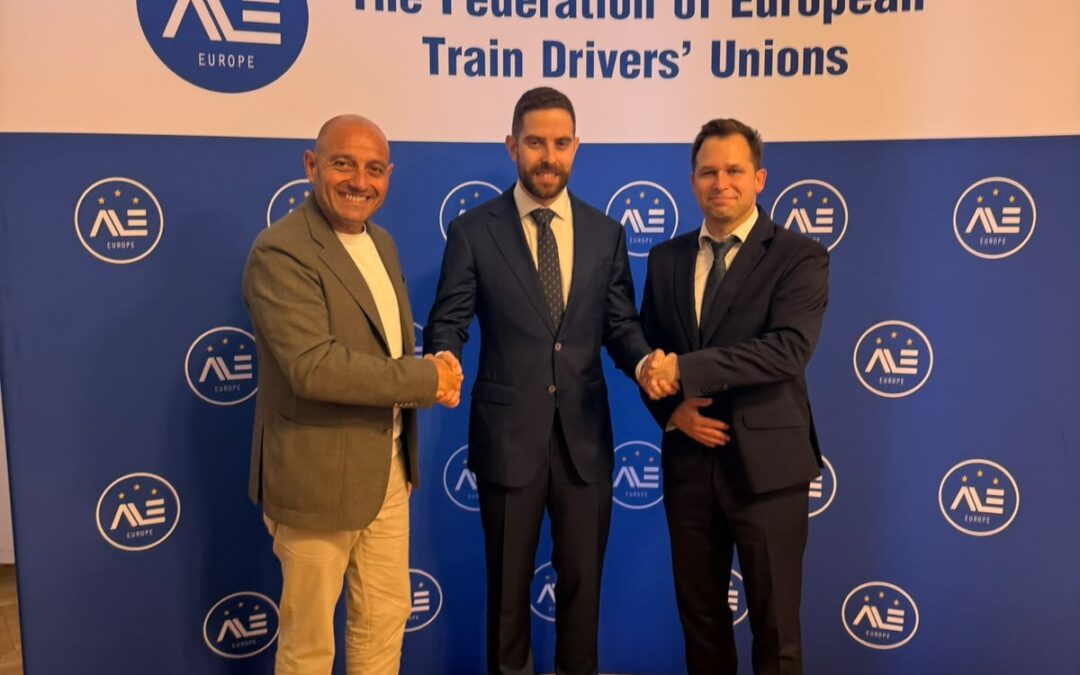
Warsaw, 29 September 2026, The Federation of European Train Drivers’ Unions (ALE) held its 10th Congress in Warsaw, Poland, bringing together representatives of its member organisations to review the Federation’s activities, elect its new leadership and define the priorities for the coming years.
Hosted by the Polish trade union ZZM, the Congress marked an important milestone in ALE’s development, combining the renewal of its governing bodies with a renewed commitment to the representation of train drivers at European level.
A new Executive Presidency for 2026-2030
One of the main outcomes of the Congress was the unanimous election of the new ALE Executive Presidency for the 2026–2030 mandate:
- President: Diego Martín Fernández (SEMAF, Spain)
- Vice-President: Vincenzo Multari (FAST, Italy)
- Vice-President: Daniel Biernacik (ZZM, Poland)
The newly elected leadership expressed its commitment to strengthening cooperation among ALE’s member organisations, reinforcing the Federation’s institutional presence and ensuring that the professional experience of train drivers continues to play a central role in European railway policymaking.
The Congress also elected David Votroubek as Treasurer, together with Paolo Lauzzana and Peter Dubovsky as Auditors.
Strengthening European cooperation: CESI and CER at the Congress
The Congress welcomed the participation of two prominent representatives of the European railway and trade union community.
Klaus Heeger, Secretary General of the European Confederation of Independent Trade Unions (CESI), highlighted the longstanding cooperation between CESI and ALE and stressed the importance of strong professional representation in responding to Europe’s evolving labour market.
His intervention addressed major challenges such as digitalisation, artificial intelligence, demographic change and the need to attract new generations of railway professionals. He also underlined the importance of quality employment, professional training and appropriate working conditions.
Alan Beroud, Chairman of the Community of European Railway and Infrastructure Companies (CER), emphasised the value of cooperation among European railway stakeholders to strengthen the sector’s common voice.
His contribution addressed the revision of the Train Drivers’ Directive, professional qualifications, training, operational communication and the ongoing discussions concerning train drivers’ working and rest time.
The participation of both organisations provided an opportunity to reinforce institutional dialogue and underline the importance of cooperation while respecting the specific responsibilities and perspectives of each stakeholder.
European railway safety and working conditions at the centre of ALE’s priorities
Throughout the Congress, delegates reaffirmed the need for ALE to remain actively involved in the European regulatory and technical processes that directly affect train drivers.
Among the main priorities identified were:
- Revision of the Train Drivers’ Directive (TDD): ensuring that future European legislation reflects operational realities, maintains high professional standards and adequately addresses training, certification and safety requirements.
- Driving, working and rest time: contributing to European discussions on monitoring and regulatory frameworks, with particular attention to fatigue, safety and the specific characteristics of train drivers’ duties.
- Railway interoperability and technological development: maintaining active involvement in ERTMS/ETCS, digitalisation and the operational implications of new technologies.
- Professional training and qualification: safeguarding high-quality training standards and preventing practices that undermine professional competence or create downward pressure on employment conditions.
- Human factors and operational safety: promoting the recognition of train drivers’ practical experience in the development of railway safety policies.
ALE reiterated that technological progress, competitiveness and market integration must go hand in hand with strong safety standards, adequate working conditions and meaningful involvement of railway professionals.
Recognising a legacy of commitment: ALE Honorary Presidency
The Congress paid tribute to the outgoing Executive Presidency, acknowledging its longstanding dedication to building and consolidating ALE as an independent European organisation representing train drivers.
In recognition of their outstanding contribution, the Congress approved the appointment of Juan Jesús García Fraile, Leszek Miętek and Pietro Serbassi as Honorary Presidents of ALE.
Their leadership has been instrumental in strengthening cooperation between national train drivers’ unions and establishing ALE as a recognised professional voice within the European railway sector.
This recognition also reflects the importance of continuity, institutional experience and solidarity between generations in shaping the Federation’s future.
A united voice for the future of European rail
The 2026 Congress represented both the conclusion of an important period in ALE’s history and the beginning of a new chapter.
With renewed leadership, recognition of those who contributed to its development and a clear commitment to European railway safety and professional standards, ALE looks ahead to the coming mandate with a determination to strengthen its role as the independent European voice of train drivers.
ALE will continue working alongside its member organisations to ensure that train drivers are not merely affected by decisions concerning Europe’s railways, but are actively involved in shaping them.
The Federation extends its sincere appreciation to ZZM for hosting the Congress and to all delegates, guests and member organisations for their participation and continued commitment to ALE.

by Alejandro Martínez Treceño | Apr 13, 2026 | News
🏆 The 𝗪𝗼𝗺𝗲𝗻 𝗶𝗻 𝗥𝗮𝗶𝗹 𝗔𝘄𝗮𝗿𝗱𝘀 𝟮𝟬𝟮𝟲 are open for applications!
Across Europe, inspiring women and organisations are driving change and helping build a more inclusive, innovative and resilient railway sector. Now is the moment to recognise their impact.
Our 2026 edition will celebrate excellence in four categories:
🔹𝗪𝗼𝗺𝗲𝗻 𝗘𝗺𝗽𝗼𝘄𝗲𝗿𝗺𝗲𝗻𝘁 𝗮𝗻𝗱 𝗟𝗲𝗮𝗱𝗲𝗿𝘀𝗵𝗶𝗽 𝗔𝘄𝗮𝗿𝗱
🔹𝗥&𝗜 𝗶𝗻 𝗥𝗮𝗶𝗹𝘄𝗮𝘆 𝗔𝘄𝗮𝗿𝗱
🔹𝗡𝗲𝘅𝘁 𝗚𝗲𝗻𝗲𝗿𝗮𝘁𝗶𝗼𝗻 𝗶𝗻 𝗥𝗮𝗶𝗹 𝗔𝘄𝗮𝗿𝗱
🔹𝗪𝗼𝗺𝗲𝗻 𝗶𝗻 𝗥𝗮𝗶𝗹 𝗢𝗽𝗲𝗿𝗮𝘁𝗶𝗼𝗻𝘀 𝗔𝘄𝗮𝗿𝗱
This edition is particularly special, as it introduces a new recognition category for female hashtag#TrainDrivers and other operational staff. We strongly encourage you to recognise the outstanding work of our colleagues!!👩🏻✈️👩🏻✈️👩🏻✈️
The Awards highlight concrete achievements that create real opportunities for women in rail.
📅 Submit your application or nominate your candidate by NEW DATE!! 5 May 2026 at 12:00 CEST:
https://shorturl.at/AWEBP

by Alejandro Martínez Treceño | Jan 19, 2026 | News

by Alejandro Martínez Treceño | Mar 20, 2025 | News
On 19th March we attended, as a part of the European Union Agency for Railways’ Management Board, the 68th meeting, where the new Executive Director of the Agency was elected for the next 5 years.
The dialogue with her predecessor, Josef Doppelbauer, has been of great importance for the Train Drivers in Europe, as it has facilitated the incorporation of the vision we have as frontline workers into European policies and technical and regulatory developments in the sector.
We congratulate Oana Gherghinescu, with whom we have had several conversations in the past as she has been working for 10 years within the Agency, for this new stage of great responsibility and we confirm with her the relationship with the social representation of the Train Drivers, which we trust will continue to be very fruitful for the European railway sector.
Source of the picture: ERA

by Daniel Biernacik | Aug 8, 2024 | News
The essential work of Ukrainian train drivers and railway workers
Image: Source image. If empty remove this text.
Published: 08 August 2024, 16:08
Once again, the crucial relevance of the railways as one of the strategic means of transport of a nation becomes striking, connecting its territories and structuring it internally. Our Ukrainian colleagues are living in a very difficult situation, immersed in a conflict in which there is still no end in sight.
According to the data collected in the article published in the magazine Venerdì on 18 November 2022, we have lost 271 railway colleagues to date due to this war and despite this sad reality, their commitment is so strong that trains continue to run in Ukraine with a punctuality (94%) that is astonishing compared to the European average (78.7%), carrying out an essential task for that country, moving 200 international delegations and bringing to safety four million citizens, 2000 wounded soldiers and 11,000 tonnes of humanitarian aid delivered to date. Not a single intercity has been cancelled since the start of the conflict on Europe’s third-largest railway, the seventh-largest in the world in terms of goods transported and the sixth in terms of passengers.
Our organisation (ALE) is following with apprehension the situation in which our fellow train drivers are plunged on a daily basis and we want to convey our support to them in the hope that we will soon be able to carry out new humanitarian aid initiatives with the active collaboration of our member unions.
We renew our feeling of closeness to our Ukrainian train drivers’ colleagues, which makes us feel like an essential collective for our countries, in the hope that this conflict will end as soon as possible.

In light of the serious railway accident that occurred yesterday involving trains operated by iryo and Renfe, ALE – Federation of European Train Drivers Unions wishes to publicly express its profound sorrow and solidarity with all those affected by this tragic event.
We would like to highlight and thank the swift and exemplary response of the railway staff who, from the very first moments, took part in the management of the tragedy. Likewise, emergency services for the assistance of passengers and crews from both affected trains, acting with professionalism and dedication under extremely challenging circumstances.
ALE reiterates its commitment to railway safety and will oversee that the ongoing investigation will be conducted with the utmost rigor, independence, and transparency, with the aim of fully clarifying what happened and adopting all necessary measures to prevent a tragedy of this nature from occurring again.
The Federation remains at the disposal of train drivers and all railway workers to provide any support and assistance that may be required during these difficult times.